


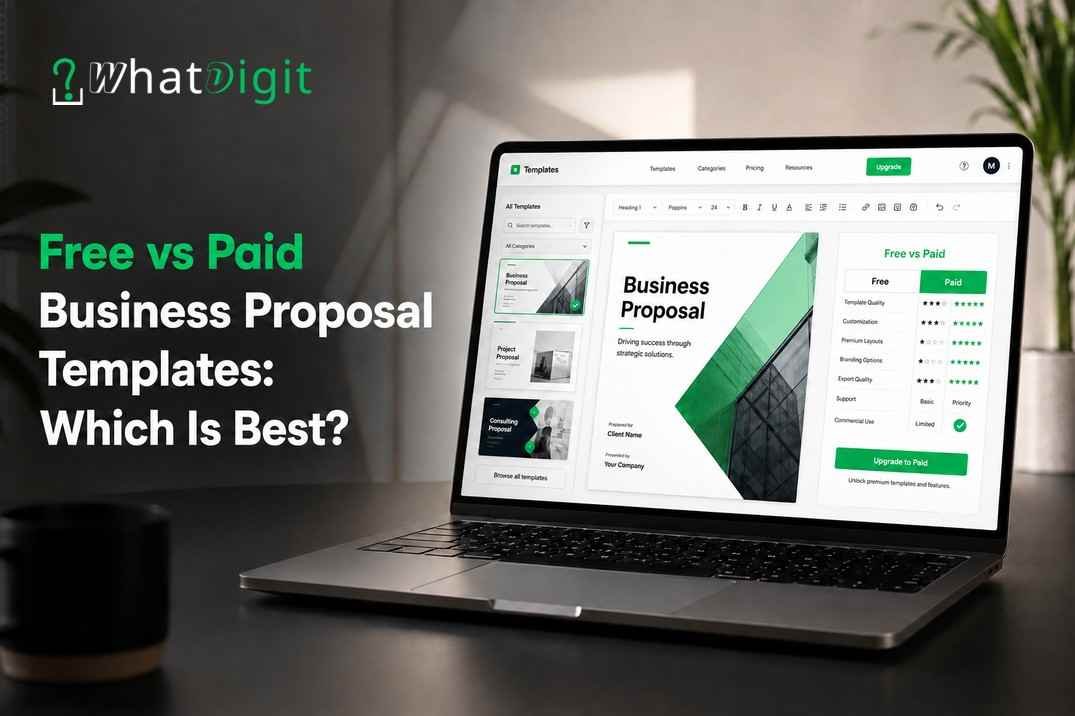
A strong business proposal needs more than persuasive words. Its structure, visual hierarchy, pricing presentation, and overall professionalism can influence how easily a prospective client evaluates an offer. Business proposal templates simplify that process by providing a ready-made framework, but choosing between free and paid options requires careful consideration. Free templates can work well for simple proposals and occasional use, while paid templates often provide greater customization, stronger visual consistency, and more specialized layouts. The right choice ultimately depends on proposal frequency, complexity, audience expectations, branding requirements, and available resources.
What Is a Business Proposal Template?
A business proposal template is a predesigned framework for presenting an offer, solution, project, service, or commercial opportunity to a prospective client or decision-maker. It organizes essential proposal information into a logical sequence and reduces the need to build every presentation from an empty page.
Templates can appear as presentation slides, editable documents, or other structured formats. However, their primary purpose remains similar: helping businesses communicate important information clearly and professionally.
What Does a Typical Proposal Template Include?
The exact sections depend on the proposal's purpose, but a practical template commonly provides dedicated space for:
Cover or title page
Executive summary
Client needs or challenges
Proposed solution
Scope of work
Deliverables
Project process
Timeline and milestones
Pricing or investment
Team information
Terms and conditions
Next steps
Moreover, presentation-based templates may include charts, timelines, comparison layouts, process graphics, and visual pricing sections.
A template provides structure rather than finished messaging. Businesses still need to customize the content around the recipient, project requirements, commercial terms, and desired outcome.
What Is the Difference Between Free and Paid Templates?
The main difference usually involves the depth of design, customization options, number of layouts, visual assets, licensing terms, and level of specialization. A free template often covers basic presentation needs, whereas a paid template may provide a larger collection of coordinated slides and editable design elements.
However, price alone does not determine quality. A simple free template can outperform an elaborate paid option when it better matches the proposal's purpose.
Free Templates Prioritize Basic Functionality
Free templates typically offer enough structure for straightforward proposals. They may include common pages for services, pricing, timelines, and company information.
Consequently, they can suit users who need a basic framework without making an upfront purchase.
Common characteristics include:
Limited slide or page options
Basic visual styling
Fewer specialized layouts
Standard typography
Limited graphic elements
Basic customization
Possible licensing restrictions
These limitations do not automatically make a free template ineffective. Instead, they affect how much additional formatting and customization may be required.
Paid Templates Usually Provide Greater Design Depth
Paid options often include broader layout collections and more refined visual systems. A single package may contain multiple cover designs, service layouts, timelines, charts, pricing formats, and closing slides.
Moreover, coordinated design elements can make extensive proposals easier to assemble without creating every visual component manually.
When Does a Free Business Proposal Template Make Sense?
A free template makes sense when proposal requirements remain simple, usage is occasional, and extensive customization is unnecessary. It can also help a small operation create a structured proposal without allocating additional resources to presentation design.
The key consideration involves whether the template supports the required content effectively.
Free Templates Work Well for Simple Proposals
Not every commercial opportunity requires an elaborate presentation. A short service proposal may only need a concise problem statement, proposed solution, scope, pricing, and next steps.
In such situations, an extensive paid package may provide more features than necessary.
A free template may be sufficient when:
The proposal has a limited number of sections.
Branding requirements remain minimal.
The recipient expects a straightforward presentation.
Proposals are created infrequently.
Existing layouts already match the required content.
The user can make minor design adjustments independently.
Therefore, selection should focus on suitability rather than simply choosing the option with more features.
They Can Help Test a Proposal Structure
A free template can also help determine which structure works before investing in a premium design. Users can test different content sequences, slide counts, and presentation styles.
This approach can clarify whether additional visual features would meaningfully improve future proposals.
When Is a Paid Business Proposal Template Worth It?
A paid template becomes more attractive when proposals play a regular role in sales, consulting, procurement, partnerships, or client acquisition. Businesses that frequently prepare proposals may gain greater value from reusable layouts and consistent presentation standards.
However, the template must still match actual requirements rather than simply offering a large number of slides.
Frequent Proposal Creation Increases Its Value
Repeatedly formatting presentations from scratch can consume significant working time. A well-structured paid template may reduce repetitive design tasks by providing reusable layouts for common proposal components.
For example, teams can maintain consistent formats for:
Project objectives
Client challenges
Proposed solutions
Work processes
Deliverables
Project phases
Pricing options
Timelines
Performance measures
Next steps
Consequently, users can concentrate more heavily on proposal-specific messaging and less on rebuilding standard visual structures.
High-Value Opportunities May Require Stronger Presentation
A proposal for a substantial commercial opportunity may face greater scrutiny from multiple stakeholders. Clear information hierarchy becomes particularly important when decision-makers need to evaluate scope, costs, deliverables, and implementation details quickly.
A polished template cannot compensate for a weak offer. Nevertheless, a strong presentation can make a well-developed proposal easier to read, navigate, and discuss internally.
Compare Design Quality and Visual Consistency
Visual design should support communication rather than distract from it. Both free and paid templates can look professional, but paid collections often provide more coordinated layouts for different types of information.
Consistency matters because proposals usually combine text, numbers, processes, schedules, and comparisons.
Look Beyond Attractive Cover Slides
An impressive cover provides little value if the remaining layouts cannot handle real proposal content. Therefore, evaluate the full template rather than judging its opening page.
Check whether the design provides practical layouts for:
Longer text sections
Short key messages
Data visualization
Project phases
Pricing packages
Service comparisons
Team profiles
Case information
Calls to action
Moreover, confirm that visual elements remain readable after replacing placeholder text with actual proposal content.
Prioritize Readability Over Decoration
Complex graphics can make a template appear sophisticated while reducing practical usability. A proposal should direct attention toward the client's problem, proposed solution, commercial terms, and next action.
Therefore, favor layouts with clear typography, sufficient spacing, logical alignment, and strong visual hierarchy.
Evaluate Customization Before Choosing a Template
Customization determines whether a template can represent a specific business rather than looking like an unchanged stock presentation. Even an attractive design may become restrictive if basic elements are difficult to modify.
Before selecting a template, consider how easily its typography, layout, graphics, and branding can be adjusted.
Check Essential Editable Elements
A useful template should allow users to modify the elements that matter to the proposal.
Important customization areas include:
Fonts
Headings
Backgrounds
Icons
Charts
Tables
Images
Pricing blocks
Timelines
Diagrams
Page or slide order
Additionally, users should be able to remove unnecessary elements without damaging the overall layout.
Consider Brand Consistency
Businesses that submit proposals frequently may want every presentation to follow a consistent visual identity. Reusable layouts can make that easier.
In contrast, repeatedly modifying unrelated free templates can create inconsistent typography, spacing, and visual treatment across proposals.
Brand consistency should never overpower readability, however. The recipient's ability to process the proposal remains more important than decorative styling.
Consider the Time Required for Editing
Template cost should not be evaluated only as a purchase price. Editing time also matters because an inexpensive option may require substantial manual adjustments before it becomes usable.
A free template that requires hours of redesign can carry a practical cost even without a purchase fee.
Calculate the Real Work Involved
Before choosing, estimate how much modification the template requires.
Consider these questions:
Does it already contain the necessary sections?
Can unnecessary layouts be removed easily?
Are charts and diagrams editable?
Does the design support actual content volume?
Can branding be applied consistently?
Will pricing information fit clearly?
Can future proposals reuse the customized version?
Consequently, a paid template may offer better practical value when it significantly reduces recurring formatting work.
Review Licensing and Usage Conditions
Template licensing deserves attention regardless of whether the file is free or paid. Availability does not automatically mean unrestricted commercial use.
Users should review the applicable terms before incorporating a template into business materials.
Check What the License Permits
Licensing conditions can differ considerably. Some templates permit commercial presentations but restrict redistribution, resale, sublicensing, or incorporation into another template product.
Before using any file, check:
Whether commercial use is permitted
Whether attribution is required
Whether modification is allowed
Whether multiple users can access it
Whether client-facing use is permitted
Whether redistribution is prohibited
Moreover, retain relevant purchase or license information when appropriate for internal records.
Match the Template to the Proposal Type
A visually appealing template can still be the wrong choice when its structure does not match the commercial situation. Proposal requirements differ across consulting, creative services, technology projects, professional services, construction, marketing, and other sectors.
Therefore, start with content requirements before evaluating aesthetics.
Choose Layouts That Support Decision-Making
Consider what the recipient needs to evaluate. A service proposal may require clear deliverables and pricing, while a project proposal may need stronger emphasis on phases, responsibilities, milestones, and implementation.
Likewise, a partnership proposal may need layouts for shared objectives, responsibilities, commercial arrangements, and expected outcomes.
Consider the Presentation Format
PowerPoint-based proposals can work particularly well when the information needs visual storytelling, presentation during meetings, or easy adaptation into a sales deck.
Businesses planning to buy business proposal PowerPoint template online in USA should therefore assess slide flexibility, editable elements, licensing, layout variety, and compatibility before making a selection.
The format should support the proposal process rather than dictate it.
Free vs Paid: Compare the Practical Value
The choice becomes easier when evaluated against actual usage. Instead of asking whether paid templates are universally better, determine whether premium features solve a genuine business requirement.
Similarly, free templates should not be selected solely because they carry no purchase price.
Choose Free When Your Needs Are Limited
A free option can be appropriate when:
You create proposals occasionally.
The proposal is short and straightforward.
You need only basic formatting.
You already have design skills.
Extensive branding is unnecessary.
The available layouts fit your content.
The license permits your intended use.
In these circumstances, paying for unused features may provide little additional value.
Choose Paid When Reusability Matters
A paid option may provide stronger value when:
You create proposals regularly.
Multiple team members need consistent layouts.
Proposals require varied content formats.
Strong visual consistency matters.
You need editable charts and diagrams.
Reducing formatting time has practical value.
The template will support repeated client presentations.
Consequently, frequency of use can matter more than the initial purchase price.
Common Mistakes When Selecting Proposal Templates
Choosing a template too quickly can create additional work later. Attractive preview images often emphasize the strongest layouts while revealing little about everyday editing requirements.
A more deliberate evaluation can prevent common problems.
Choosing Design Before Content
One frequent mistake involves selecting a visually impressive template before defining proposal requirements. This can force important information into layouts that were never designed to support it.
Instead, outline the proposal first. Then choose a template that accommodates the required sections.
Using Every Available Layout
Premium templates sometimes contain dozens of slides. However, more slides do not automatically produce a stronger proposal.
Remove layouts that do not contribute directly to the recipient's decision. Concise proposals can often communicate value more effectively than presentations filled with unnecessary sections.
Failing to Personalize the Proposal
Templates should provide structure, not generic messaging. Placeholder language needs to be replaced with information relevant to the specific opportunity.
Therefore, customize the problem statement, solution, scope, deliverables, pricing, timeline, and next steps around the intended recipient.
How to Make the Final Decision?
The best template is the one that supports the proposal's content, audience, workflow, and presentation requirements without creating unnecessary editing work.
Price should remain one consideration rather than the only deciding factor.
Ask Seven Questions Before Choosing
Before selecting a free or paid option, ask:
How often will the template be used?
How complex are typical proposals?
Does the layout match required sections?
How much customization is necessary?
Does the license permit intended usage?
How much editing time will the template require?
Can the customized version support future proposals?
Answers to these questions provide a stronger basis for selection than appearance alone.
Moreover, test the template with real content whenever possible. Actual text, pricing, and timelines often reveal limitations that placeholder previews hide.
Conclusion
Free and paid business proposal templates can both produce effective results when matched to the right purpose. Free options suit straightforward needs, limited customization, and occasional use, while paid templates can offer stronger design consistency, broader layout choices, and greater reusability. Before choosing, evaluate proposal complexity, audience expectations, branding requirements, licensing, editing effort, and frequency of use.
Most importantly, select a template that strengthens clear communication rather than distracting from the offer. A well-chosen structure helps decision-makers evaluate the proposal efficiently and keeps attention on the value being presented.
FAQs
1. Are free business proposal templates good enough?
Yes, free business proposal templates can be sufficient for simple or occasional proposals when their layouts match the required content. Evaluate readability, customization, licensing, and section availability before using one. A free option becomes less practical when extensive redesign is necessary to make it suitable for client-facing communication.
2. What do paid business proposal templates usually offer?
Paid templates commonly provide more layouts, coordinated design elements, editable graphics, charts, timelines, pricing sections, and presentation variations. However, features differ between templates. Buyers should evaluate whether those additional components support actual proposal requirements rather than choosing an option simply because it contains a larger number of slides.
3. Is a paid proposal template worth the cost?
A paid template can justify its cost when it reduces recurring formatting work, supports frequent proposals, and provides layouts that match business requirements. Its practical value increases when teams can customize and reuse it consistently. For occasional, simple proposals, however, a suitable free template may provide everything necessary.
4. Can I customize a free business proposal template?
Many free templates allow customization, but the available editing options depend on the file and its licensing conditions. Check whether fonts, layouts, graphics, charts, and other design elements can be changed. Additionally, verify commercial-use permissions before using a customized free template for client-facing business purposes.
5. What should I check before downloading a proposal template?
Check the available sections, editable elements, file format, visual consistency, licensing conditions, and compatibility with your preferred software. Moreover, assess whether the layouts can accommodate real proposal content. Preview images alone may not reveal how easily the template handles detailed pricing, timelines, deliverables, or project information.
6. How many pages or slides should a business proposal have?
There is no universal number because proposal length depends on complexity, audience, scope, and commercial requirements. Include enough material to explain the problem, solution, deliverables, pricing, timeline, and next steps clearly. However, remove sections that do not help the recipient evaluate or act on the proposed offer.
7. Does a professional template improve a business proposal?
A professional template can improve readability, visual hierarchy, consistency, and information organization, but design cannot replace strong proposal content. The offer still needs relevant messaging, clear deliverables, credible pricing, and logical next steps. Therefore, use design to support the commercial message rather than allowing visual elements to dominate it.
8. Should every business use the same proposal template?
No. Template requirements vary according to proposal type, audience, service complexity, presentation format, and branding needs. A short professional-services proposal may require different layouts from a detailed project presentation. Consequently, businesses should select templates according to communication requirements instead of following a single standardized format for every opportunity.
9. Can one paid template be reused for multiple proposals?
A paid template may support repeated use when its license permits that usage and its layouts remain flexible enough for different opportunities. Users can create a customized master version for consistency. However, each proposal should still contain recipient-specific messaging, scope, pricing, timelines, and other information relevant to the opportunity.
10. Which is better for a small business: free or paid?
Neither option is automatically better for every small business. A free template can suit occasional, straightforward proposals, while a paid template may make sense for frequent client pitches or stronger branding requirements. Compare the template's editing time, layout flexibility, licensing, presentation quality, and expected reuse before deciding.
Comments (0)